


Magic Wiki, Uncategorized
Microdosing explained: why people use it for focus, creativity and mood
Apr
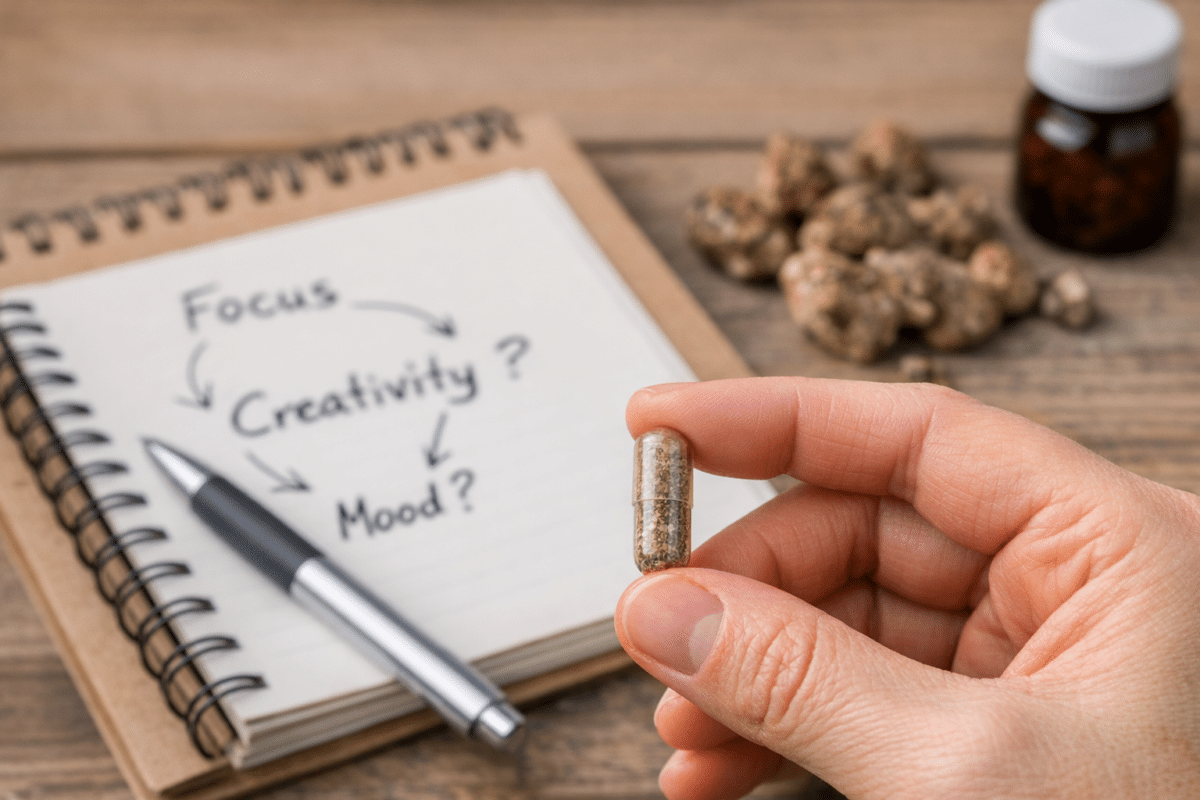
Microdosing was once a niche practice, but is now a widely discussed topic. More and more people concerned with mental performance are delving into the microdosing truffles. In microdosing, you take a very small amount of a psychoactive substance, so low that no hallucinations or strong changes in consciousness occur. Some users describe subtle changes in focus, creativity and emotional balance.
Microdosing means taking a very low dose of psychedelic substance, usually 5-10% of a normal dose, without obvious hallucinations.
What is microdosing?
Microdosing means taking about 5 to 10 percent of a regular dose of a psychedelic substance, usually psilocybin (from truffles or mushrooms) or LSD. The amount is usually so low that you can function normally.
- You can function normally while working or studying.
- No strong visual effects occur.
- The effect is subtle and often difficult to recognize immediately.
Many people follow a set schedule, for example, one day of dosing followed by one or two rest days. This helps to avoid habituation and better observe effects [2].
Why do people use microdosing?
Focus and productivity
A commonly cited reason for microdosing is concentration. Users describe that they are less easily distracted and more easily complete long-term tasks.
Creativity and problem-solving thinking
Creatives sometimes use microdosing to think flexibly and make new associations. It is usually not extreme inspiration, but a subtle change in perspective.
Mood and emotional balance
A third reason is emotional stability. Some users describe a more neutral or balanced mood and less fretting [1].

How does microdosing work in the brain?
Although large-scale clinical research is still limited, hypotheses based on neuroscientific insights exist [3].
Serotonergic activity
With psilocybin, it is believed that serotonin receptors, particularly 5-HT2A, are slightly activated. This could potentially contribute to cognitive flexibility.
Network flexibility
Researchers suspect that microdosing causes slightly more communication between brain regions. This could make thinking patterns less rigid.
Psychological effect and expectation
In addition to neurobiology, expectation also plays a role. Reflection, intention and attention to personal development can in themselves affect how a person feels.
Dosage and schedule
A commonly used microdosing scheme is:
- Day 1: microdose
- Day 2: rest day
- Day 3: rest day
- Repeat
The purpose of rest days is to prevent tolerance and better observe how you react [2].

What should you pay attention to when microdosing?
What should you pay attention to when microdosing?
- The effects are subtle and not immediately noticeable.
- A journal can help keep track of changes.
- Rest days help prevent habituation.
Microdosing is not a quick fix but a process of observation and consistency.
Frequently asked questions (FAQ)
You often only notice subtle changes after several days. For obvious psychoactive effects, the dose is usually too high.
Many users choose microdosing precisely because daily activities usually remain as usual.
Research on microdosing is still developing. Some studies show possible effects, but more controlled studies are still needed.
Read more
- Magic truffles benefits, effects and safe use
- Frequently asked questions about microdosing
- Microdosing tips for beginners and advanced users
Resources
- PLoS One – A systematic study of microdosing psychedelics (2019)
- Journal of Psychopharmacology – Microdosing psychedelics: more questions than answers (2019)
- Frontiers in Human Neuroscience – The entropic brain theory (2014)
Disclaimer: This text is intended for educational purposes and does not constitute medical or legal advice. Psychedelic substances are regulated or banned in many countries. Use may carry risks, especially if you are mentally fragile or on medication. When in doubt, always consult a qualified professional.
